Rechercher dans ce blog

Friday, October 28, 2022

B.C. sees record uptake for free flu vaccines - Vancouver Sun

Article content

Despite a bumpy rollout of B.C.’s influenza immunization campaign, a record number of British Columbians have rolled up their sleeves to get a shot, said the health ministry.

Article content

More than 630,000 British Columbians have received a flu vaccine since the campaign’s Oct. 11 launch.

Article content

About 43 per cent who received their flu shot got their COVID-19 fall booster at the same time.

Health experts have been predicting a surge in flu cases this year compared to the last two years when pandemic precautions such as masking and social distancing helped cut down on cases.

But with society largely back to normal, B.C. health officials are urging people to get a flu shot as well as a bivalent COVID-19 booster to better protect themselves during the upcoming respiratory season.

For the first time, the province is offering everyone six months of age or older free flu shots, which can be administered in health-authority clinics, doctor’s offices or pharmacies. Seniors age 65 and older are eligible for an enhanced influenza vaccine, which is also free.

Article content

Health officials say it is safe to get the COVID-19 booster and flu vaccines at the same time. The province’s Get Vaccinated system allows you to book one appointment for both shots.

If you prefer getting the COVID-19 booster and flu shot on different days, however, choose which one you want to get first. When that appointment is complete, the system will allow you to book a second appointment.

How to get your flu shot:

• Book an appointment at a health-authority clinic or pharmacy through Get Vaccinated (you have to be registered with the system).

• Book an appointment by phoning the toll-free provincial call centre at 1 833 838-2323.

• Book an appointment at your doctor’s or primary health-care provider’s office if they provide flu shots.

Adblock test (Why?)


B.C. sees record uptake for free flu vaccines - Vancouver Sun
Read More

Thursday, October 27, 2022

UNBC Fall Influenza Vaccine Clinic Information - University of Northern British Columbia

We are happy to announce the 2022 UNBC Flu Clinics dates!!

UNBC Fall Influenza Vaccine Clinic Information

Flu Vaccine clinics are hosted by the UNBC Medical Clinic in collaboration with UNBC Nursing Students. Please remember that these clinics are intended to be a learning opportunity for our Nursing Students, so if you have any particular health concerns or special considerations, please speak to your Primary Care Provider about vaccination or refer to the information below before booking your appointment.

Please note that we will not have COVID-19 vaccines available at these clinics.

UNBC Clinics Dates and Location

Bentley Center Alcove/Alumni Lounge on the Prince George Campus

Thursday Oct 27, 2022 10:00am – 2:00pm
Wednesday Nov 2, 2022 10:00am – 2:00pm
Friday Nov 4, 2022 10:00am – 2:00pm
Tuesday Nov 8, 2022 10:00am – 2:00pm
Thursday Nov 10, 2022 10:00am – 2:00pm

Who is eligible: Any UNBC student, staff or faculty member

How to book an appointment

This year we are happy to offer both booked and drop-in appointments. You can either book an appointment at the link below or drop-in the flu clinics at the times listed. Please note that there may be a wait time if you choose to drop-in. To provide you with a convenient means of scheduling your appointment, please consider using Signup Genius to do so.

To access the Signup Genius created for the flu clinics please copy and paste the following link into a separate browser window.
https://www.signupgenius.com/go/10c0d49a5a62ca6fcc25-unbc1

You DO NOT ​need to create an account to use this sign up. If you use your actual email address, Signup Genius will send a confirmation of your appointment booking only. It may also help UNBC Medical Clinic Staff to alert you if a change to your appointment is required.

Signup Genius operates and stores any information you provide in the USA. When using this system, the information you provide will only be visible to UNBC Medical Clinic staff, however you may also choose to use an alias, or pseudonym and/or fake email address to further protect your privacy. While creating pseudonyms can be fun, we will not accept your appointment if your pseudonym is offensive or derogatory. UNBC Medical Clinic staff will ask you to provide your name or pseudonym when you arrive for your appointment time.


This service intends to provide a convenient tool to allow you to schedule your appointment. However, if you are concerned about using this service while incorporating the advice we provided above, you can contact the UNBC Medical Clinic at 250-960-6370 or nurse@unbc.ca. Please be patient, as there may be delays in responding to your request through these means.

Prior to your appointment

We request that you please wear a mask to your appointment.

Influenza vaccines can be administered any time before or after the administration of any COVID 19 vaccine.

Do not attend your appointment if you are experiencing any symptoms related to COVID 19 or if you have been asked to self-isolate. Current COVID 19 symptom and information found here: www.bccdc.ca/health-info/diseases-conditions/covid-19/about-covid-19/sym...

Expect to remain in clinic area for 15 minutes after your vaccination.

Other options

You may also be able to obtain your flu vaccine from:

  • Primary Care provider or Family Doctor’s Office
  • Local Pharmacy
  • Northern Health Flu Clinics

For information on flu clinics offered in your area, go to www.getvaccinated.gov.bc.ca or www.northernhealth.ca

Please note, we try our best to have enough vaccine product available for the UNBC Clinics, but we are not guaranteed to receive all the doses we request.

More Information about Influenza

https://www.northernhealth.ca/health-topics/flu
https://www.healthlinkbc.ca/health-feature/flu-season
http://www.bccdc.ca/health-info/diseases-conditions/influenza

Adblock test (Why?)


UNBC Fall Influenza Vaccine Clinic Information - University of Northern British Columbia
Read More

What's ECMO therapy? It saves the lives of COVID-19 patients, but the treatment can lead to higher mental health diagnoses - Vancouver Sun

A new study by Ottawa researchers found that survivors of ECMO had a 24 per cent higher rate of mental health diagnoses after discharge compared to other ICU survivors.

Article content

It has been called life support of the last resort, and during the pandemic ECMO, or extracorporeal membrane oxygenation, has helped pull some critically ill patients back from the brink of death.

Advertisement 2

Article content

But treatment with the advanced form of life support appears to come at a cost for some patients, according to a new study by Ottawa researchers.

Article content

The study, published in JAMA this week, found that survivors of ECMO had a 24 per cent higher rate of mental health diagnoses after discharge compared to other ICU survivors.

“We already knew that ICU survivors can suffer mental health impacts from the trauma of invasive treatments, living with new physical limitations and dealing with long recovery times,” said lead author Dr. Shannon Fernando, a critical care physician at Lakeridge Health and postdoctoral fellow at The Ottawa Hospital and the University of Ottawa.

“We suspected ECMO survivors would be at greater risk of mental health impacts because they are sedated and ventilated for longer and often face a more challenging recovery. But we didn’t have clear data until now.”

Advertisement 3

Article content

ECMO, which temporarily replaces the heart and lungs of patients suffering from heart or respiratory failure, is used at five centres in Ontario, including the University of Ottawa Heart Institute.

The timing of the research is particularly relevant, say researchers, because use of ECMO grew worldwide during the COVID-19 pandemic to address record numbers of patients with severe respiratory failure. At one point, Ontario had twice as many patients on ECMO as it did pre-pandemic. It has typically been used infrequently because of limits on who qualifies and would benefit from use.

“We suddenly have a lot more ECMO survivors because of COVID-19,” said Dr. Kwadwo Kyeremanteng, co-senior author and scientist and critical care doctor at The Ottawa Hospital. “We need to make sure they have the mental health support they need to recover and survive.”

Advertisement 4

Article content

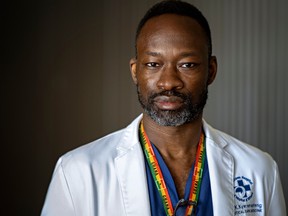
OTTAWA – Dr. Kwadwo Kyeremanteng, co-senior author of the paper, said patients who received ECMO in larger numbers curing the pandemic need mental health support. Credit Michelle Valberg
OTTAWA – Dr. Kwadwo Kyeremanteng, co-senior author of the paper, said patients who received ECMO in larger numbers curing the pandemic need mental health support. Credit Michelle Valberg Photo by MICHELLE VALBERG /jpg

Because it is so invasive, ECMO is generally used on younger patients. About 50 to 65 per cent of those who receive the treatment survive and most are alive five years later, said Fernando.

The researchers from The Ottawa Hospital, the Institut du Savoir Montfort, ICES and the University of Ottawa studied health records from all ICU survivors in Ontario between April 2010 and March 2020. They matched 642 ECMO survivors with 3,820 ICU survivors who had similar characteristics, including age, sex, mental health history severity of illness and length of stay.

Thirty seven per cent of the ECMO survivors were diagnosed with a new mental health condition, such as depression, anxiety and traumatic disorders, a 24 per cent higher rate of new mental health diagnoses than the other ICU survivors.

Advertisement 5

Article content

Fernando led earlier research that found survivors of ICU are at higher risk of suicide and self harm after discharge. He said further heightened suicide and self-harm risk was not seen in the study on ECMO patients, but the research calls for a greater focus on the mental health of patients discharged from ICU and especially those who received ECMO treatment.

“Patients will need help long after they leave the ICU.”

Fernando said he has cared for patients recovering after receiving ECMO treatment. Patients would frequently describe nightmares and recurrent thoughts that were in keeping with post-traumatic stress disorders.

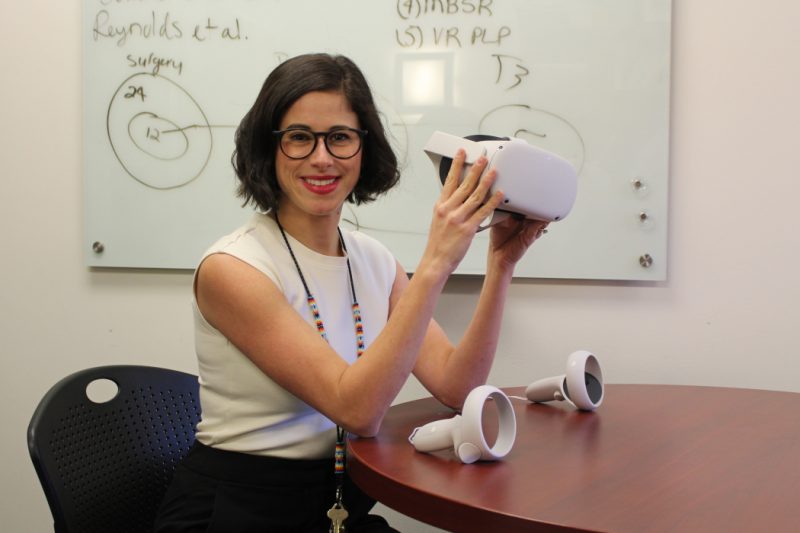
Dr. Shannon Fernando says ECMO and ICU patients need support “long after they leave.” Credit The Ottawa Hospital
Dr. Shannon Fernando says ECMO and ICU patients need support “long after they leave.” Credit The Ottawa Hospital Photo by Supplied /The Ottawa Hospital

“It became clear it was exceedingly common.”

Knowing that can help to reassure patients, said co-senior author Dr. Peter Tanuseputro, physician-scientist at The Ottawa Hospital and ECES and investigator at the Bruyère Research Institute.

“As care providers, we can tell our patients that its common to struggle with your mental health after an ICU admission. ICU survivors need to realize that they often face months or years of recovery and families and healthcare providers need to support them.”

The full study can be found here.

For more health news and content around diseases, conditions, wellness, healthy living, drugs, treatments and more, head to Healthing.ca – a member of the Postmedia Network.

    Advertisement 1

    Comments

    Postmedia is committed to maintaining a lively but civil forum for discussion and encourage all readers to share their views on our articles. Comments may take up to an hour for moderation before appearing on the site. We ask you to keep your comments relevant and respectful. We have enabled email notifications—you will now receive an email if you receive a reply to your comment, there is an update to a comment thread you follow or if a user you follow comments. Visit our Community Guidelines for more information and details on how to adjust your email settings.

    Adblock test (Why?)


    What's ECMO therapy? It saves the lives of COVID-19 patients, but the treatment can lead to higher mental health diagnoses - Vancouver Sun
    Read More

    "Dark Matter" That Shapes Cancer Behavior Unveiled in Landmark Studies - Technology Networks

    Cancers can evolve to become more aggressive without relying only on DNA mutations, two major studies published simultaneously in Nature reveal.

    The research characterizes a whole extra level of control of cancer gene activity within tumours, which the researchers describe as cancer’s "dark matter".

    The two landmark studies showed how a level of gene control called ‘epigenetics’ plays a central role in the development and progression of bowel cancer. Testing cancers for DNA mutations alone misses this level of control – and so can fail to predict how cancers may behave and respond to treatment.

    The research, published today in Nature, was led by scientists at The Institute of Cancer Research, London, Human Technopole in Milan and Queen Mary University of London. It was funded by Wellcome, the Medical Research Council (MRC) and Cancer Research UK.

    More accurately predict cancer's behaviour

    The research could change the way we think about cancer and its treatment – and lead to new forms of tests that predict cancer’s behaviour more accurately.

    Epigenetics involves chemical changes to the three-dimensional structure of DNA which don’t alter the DNA code itself but can control access to genes. It has increasingly been recognised as playing an important role in the development of cancer.

    Now for the first time, scientists have been able to track the influence of epigenetic control on how bowel cancers grow, develop and evolve over time, separately from the influence of mutations to the DNA code, which they mapped simultaneously.

    The researchers observed important epigenetic changes in every cancer they examined and found signs that epigenetic changes are involved in cancer’s ability to evolve and become more aggressive.

    In the first paper, the researchers collected 1,373 samples from 30 bowel cancers and looked at epigenetic changes as cancers evolved. They showed that epigenetic changes:

    • are highly common in cells which have become cancerous and occur around genes already known to drive cancer
    • are heritable, meaning they can be inherited by cells with each cell division, and that they contribute to cancer evolution
    • influence how cancer cells accumulate DNA mutations
    • were present in cancer cells that had survival advantages which helped them to grow more than other cells.

    Survival advantages

    The second Nature paper aimed to understand why cancer cells within the same tumour can be so different to one another – a characteristic that helps some cells develop survival advantages and become resistant to cancer treatments.

    The researchers wanted to understand whether the diversity of cell types within a tumour is governed by variation in the DNA code, or something else. They looked at the DNA sequence in diverse samples taken from different parts of the same tumour.

    They found:

    • less than 2 per cent of changes in the DNA code in independent areas of a tumour were associated with changes in gene activity
    • variation in cancer cell characteristics throughout tumours is often governed by factors other than DNA mutations.

    The researchers point out that their findings are observational in nature and more work needs to be done to determine cause and effect between specific epigenetic changes and modifications to cancer behaviour.

    Fundamental advance in our understanding of cancer

    Collectively, the papers represent a fundamental advance in our understanding of cancer. The researchers stress that DNA mutations are fundamental in "setting the scene" for a cancer’s development and evolution – but that much of the subsequent behaviour of cancer cells is determined by other factors, such as epigenetics.

    That could help explain why DNA tests don’t always predict how cancers will respond to treatment and help doctors to tailor treatments for patients more effectively. It could also explain why some environmental exposures can cause cancer without leading to mutations in the DNA code.

    Professor Trevor Graham, Director of the Centre for Evolution and Cancer at the ICR, said:

    “We’ve unveiled an extra level of control for how cancers behave – something we liken to cancer’s ‘dark matter’. For years our understanding of cancer has focused on genetic mutations which permanently change the DNA code. But our research has shown that the way the DNA folds up can change which genes are read without altering the DNA code and this can be very important in determining how cancers behave.

    “I hope our work will change the way we think about cancer and its treatment – and should ultimately affect the way patients are treated. Genetic testing for cancer mutations only gives us part of the picture about a person’s cancer – and is blind to ‘epigenetic’ changes to how genes are read. By testing for both genetic and epigenetic changes, we could, potentially, much more accurately predict which treatments will work best for a particular person’s cancer.”

    Professor Andrea Sottoriva, Head of the Computational Biology Research Centre at Human Technopole in Milan, who co-led the research, said:

    “When we study how cancers evolve over time, we tend to look at DNA mutations, but it’s clear that epigenetic changes also enable cancer to adapt and develop a survival advantage over other cells.

    “We have for the first time been able to map epigenetic changes alongside the accumulation of DNA mutations as a colorectal tumour evolves. This provides exciting opportunities to create new treatments for cancer that don’t target the effects of DNA mutations, but instead the epigenetic changes which determine how genes are read.”

    "Open's up exciting future opportunities"

    Professor Kristian Helin, Chief Executive of the ICR, London, and a world leader in the study of epigenetics, said:

    “This discovery represents an exciting advance in our understanding of cancer biology.  Cancer’s ability to rapidly change and evolve is a key reason why it is so hard to treat. Exactly how cancer cells do this, and the factors that control how it can adapt to evade treatment, is not well understood.

    “This important work demonstrates the potential role of epigenetic regulation in the development of cancer and the complexity of its behaviour. It opens exciting future opportunities to assess cancer using both genetic and epigenetic tests, and eventually to treat cancer with epigenetic-directed drugs."

    References:

    1. Heide T, Househam J, Cresswell GD, et al. The co-evolution of the genome and epigenome in colorectal cancer. Nature. 2022:1-11. doi: 10.1038/s41586-022-05202-1 
    2. Househam J, Heide T, Cresswell GD, et al. Phenotypic plasticity and genetic control in colorectal cancer evolution. Nature. 2022:1-10. doi: 10.1038/s41586-022-05311-x

    This article has been republished from the following materials. Note: material may have been edited for length and content. For further information, please contact the cited source.

    Adblock test (Why?)


    "Dark Matter" That Shapes Cancer Behavior Unveiled in Landmark Studies - Technology Networks
    Read More

    ECMO survivors have higher rate of new mental health diagnoses than other ICU survivors - - The Ottawa Hospital

    [unable to retrieve full-text content]

    1. ECMO survivors have higher rate of new mental health diagnoses than other ICU survivors -  The Ottawa Hospital
    2. What's ECMO therapy? It saves the lives of COVID-19 patients, but the treatment can lead to higher mental health diagnoses  Ottawa Citizen
    3. ECMO May Come With Mental Health Costs  Medpage Today
    4. View Full coverage on Google News

    ECMO survivors have higher rate of new mental health diagnoses than other ICU survivors - - The Ottawa Hospital
    Read More

    Soaring RSV rates in parts of Quebec lead national cases, strain hospital staff - Delta Optimist

    MONTREAL — Soaring cases of respiratory syncytial virus in Quebec have pushed the positivity rate to 15 per cent in Montreal and Quebec City.

    Weekly provincial surveillance data ending Oct. 22 show positivity rates of the childhood illness hover just over 13 per cent provincewide, with slightly higher rates in the two cities and wide variation among smaller communities.

    It’s several times the most recent federal positivity rate of 3.5 per cent, although that data is a week behind and covers the week ending Oct. 15. 

    The head of the pediatric emergency department at Montreal's CHU Sainte-Justine said Tuesday his emergency rooms “are completely jammed with patients” with respiratory viruses, largely driven by RSV.

    "There's just so much more — a larger wave with sicker patients therefore more hospitalizations, and our hospitals are just full to the brim," Dr. Antonio D’Angelo said Tuesday.

    "In the emergency rooms, well, they're just all over the place — they're in our respiratory unit in the emergency room but they're also in sort of a makeshift corridor for a temporary unit there. And then we had to open up another corridor with patients with respiratory cases that needed treatments. 

    "And that's very, very unusual. In fact, we've never had it this bad."

    A pediatric infectious disease specialist at the Montreal Children's Hospital reported similar spikes there, noting that admissions suggest Quebec is already in the middle of a very bad RSV season when normally it shouldn't have even started yet.

    Dr. Jesse Papenburg explained the early onset as the legacy of a similarly early and intense RSV season last year. He said it began in September 2021 and "was over" by January, when other provinces hadn't even yet reached their peak.

    As for why Montreal saw the early spike, he said France and New York City each saw springtime RSV outbreaks in 2021. Since both regions attract a lot of travel from Montreal, it's possible that importation combined with a susceptible population and easing pandemic measures created the right circumstances for a summer surge.

    Further adding to the burden this year is the fact RSV seems to be hitting more than just babies and toddlers to include three- and four-year-olds, who are getting the virus for the first time because they had been shielded by now-lifted pandemic precautions, said D’Angelo.

    D'Angelo said he expected similar rates to emerge in other Canadian centres, acknowledging that other hospitals are already seeing increasing numbers of respiratory patients, as well as strained resources and staff.

    The national figures show a positivity rate of two per cent in Ontario and 3.4 in Atlantic Canada. The lowest rates were 1.4 per cent in British Columbia, one per cent on the Prairies and two per cent in the Territories. 

    Ottawa pediatric hospital CHEO said for the week ending Oct. 15, out of 298 RSV tests 30 were positive — about 10 per cent. 

    A CHEO spokesperson said 12 patients were hospitalized for RSV last month — the same record-high number as last year, and much higher than the pre-pandemic average of about one to two hospitalizations for September.  

    D'Angelo said RSV typically spreads by community, and does not generally emerge at the same time across the country.

    "It often happens where there'll be one sort of epicentre where everything sort of starts to occur, and then it sort of spreads out," he said.

    D'Angelo said strain at his hospital was compounded by the fact that about 30 per cent of patients there don't have a family physician and end up going to emergency with minor ailments that otherwise could be treated elsewhere.

    "Now everything's sort of by appointment instead of just walk-in," he said, believing more walk-in clinics could address hospital demand.

    "With the amount of viruses that we're seeing, a lot of these docs don't have any more time available for their own patients, which is kind of sad."

    While only a small percentage of RSV cases result in hospitalization, the illness is common among children. By age two, 90 per cent of kids will have had an RSV infection, said Papenburg.

    However, some infants are at greater risk of severe illness and that's when it's important to be have a predictable viral season, he said.

    The RSV season typically runs from November to March but Quebec experts noticed a five per cent positivity rate in August, said Papenburg. 

    He said that prompted the province to move a preventive campaign for high-risk babies to mid-September, instead of the usual November.

    A monoclonal antibody injected monthly to very high risk infants can cut their risk of hospitalizations by half, he said. These may include children younger than one year of age who were born very prematurely, or who have congenital cardiac disease or chronic lung conditions.

    — With files from Cassandra Szklarski in Toronto.

    This report by The Canadian Press was first published Oct. 25, 2022.

    The Canadian Press

    Note to readers: This is a corrected story. A previous version stated Quebec's provincial RSV rates were nearly 14 per cent. In fact, they were slightly over 13 per cent.

    Adblock test (Why?)


    Soaring RSV rates in parts of Quebec lead national cases, strain hospital staff - Delta Optimist
    Read More
    Wednesday, October 26, 2022

    Community Condom Access Pilot Program - Government of Northwest Territories

    The Government of the Northwest Territories (GNWT) is launching a pilot program to install up to 200 free condom dispensers in public locations in all NWT communities to combat the ongoing syphilis outbreak.

    To launch this program, the Department of Health and Social Services  is working with the business, education, and local government sectors to identify locations where condom dispensers can be placed. Free condoms will be available in public places  people frequently visit, as well as places that are open outside of regular business hours. Efforts will prioritize smaller communities with limited access to condoms for purchase.

    The Northwest Territories has one of the highest rates of syphilis in Canada. In response, the health system is ramping up awareness and testing efforts to trace and treat infections, including promotion on how to prevent infections. Free condoms have been identified as a priority and a gap in current sexual health promotion in the NWT. While condom use does not guarantee full protection from sexually transmitted infections (STIs), men who regularly use condoms during their sexual encounters can significantly reduce the risk of STIs. This project is meant to ensure a consistent supply of condoms are available throughout the NWT during the syphilis outbreak to limit the spread and improve access to safer sex options.

    Dispensers will begin to be placed in communities over the coming weeks.

    For more information on the syphilis outbreak, visit: https://www.hss.gov.nt.ca/en/services/syphilis

    For media requests, please contact:

    Jeremy Bird

    Manager, Communications  

    Department of Health and Social Services

    Government of the Northwest Territories

    Jeremy_Bird@gov.nt.ca

    (867) 767-9052 ext. 49034

    Adblock test (Why?)


    Community Condom Access Pilot Program - Government of Northwest Territories
    Read More

    The Winnipeg Foundation Innovation Fund supports cutting-edge projects - UM Today

    February 1, 2024 —  Three interdisciplinary teams from the Rady Faculty of Health Sciences have received $100,000 grants from The Winnipeg...