Rechercher dans ce blog

Monday, September 26, 2022

Using artificial sweeteners may raise the risk of heart disease, study shows - Prestige Online Malaysia

Subscribe to our newsletter to get the latest updates.

You’re all set

Thank you for your subscription.

Adblock test (Why?)


Using artificial sweeteners may raise the risk of heart disease, study shows - Prestige Online Malaysia
Read More

Grafton, MA Organic Nutrition Counselor, Holistic Medicinal Services Expanded - Digital Journal

Poe Holistic Health has expanded their nutritional imbalance correction services in the Grafton area with new holistic supplementation services.

—

Their updated service applies functional medicine principles to nutrition in order to properly balance patients’ diets. These dietary services promote healing and growth in a natural way by combining herbal and botanical supplements with dietary adjustments, overall resulting in better physical wellbeing.

To find out more, visit https://www.poeholistichealth.com

The healthcare provider has expanded this service to Grafton as part of their mission to improve community health in as many areas of MA as possible. This expansion will bring their holistic healing services to thousands of new patients, allowing widespread access to their evidence-based natural healing regimen.

Their method involves getting to know a patient’s specific needs and then developing a custom action plan to tackle the underlying deficiencies at the root of their health problems. Their diet plans may be especially helpful for those suffering from chronic inflammation, allergies, joint and muscle pain, or environmental intolerances.

Since these problems are often associated with chronic illness, Poe Holistic Health focuses on combining symptom management with long-term healing. Their nutritional philosophy is designed to help the body rebuild by giving it access to micro and macro nutrients that typical diets may lack, such as peptides, amino acids, complex proteins, and more.

Their holistic health plans incorporate other elements such as yoga and other exercises to help the patient’s body fully absorb the nutrients it is being provided. By encouraging blood flow to underserved parts of the body, these health plans can reduce inflammation and allergy-related symptoms through stimulation of the nervous and immune systems.

While these treatments are not intended nor promoted as “cures” for a given ailment or condition, their leveraging of the body’s nutritional needs can act as a helpful supplement to traditional medicine. A hybrid course of treatment can not only boost immune health, but also assist the body in absorbing bioavailable compounds and fighting off infection.

Dr. Poe holds her doctorate in naprapathy, which involves the targeted manipulation of the body’s systems to promote regeneration and healing. Patients who are interested in her services should schedule a preliminary appointment to discuss primary goals and the conditions that a patient is seeking to treat with this service.

To learn more, visit https://www.poeholistichealth.com

Contact Info:
Name: Kristen Poe
Email: Send Email
Organization: Poe Holistic Health
Address: 129 Hartford Turnpike, Suite 4E , Shrewsbury, MA 01545, United States
Phone: +1-508-388-2853
Website: https://www.poeholistichealth.com/

Release ID: 89082184

If you detect any issues, problems, or errors in this press release content, kindly contact [email protected] to notify us. We will respond and rectify the situation in the next 8 hours.

comtex tracking

COMTEX_415278916/2773/2022-09-26T01:05:50

Adblock test (Why?)


Grafton, MA Organic Nutrition Counselor, Holistic Medicinal Services Expanded - Digital Journal
Read More

Sunday, September 25, 2022

HIV spike among B.C. drug users associated with COVID-19-related service closures, research says - CBC.ca

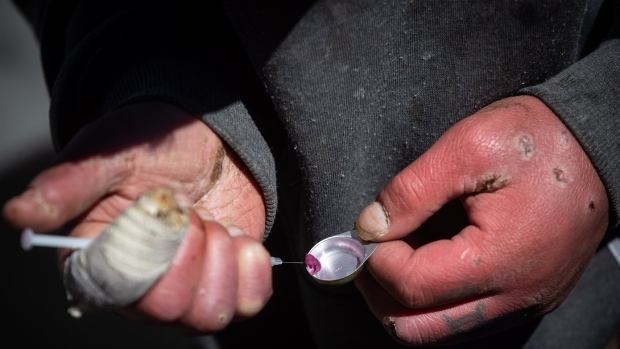
A new study says reduced access to HIV services amid early COVID-19 closures in British Columbia was associated with a "sharp increase" in HIV transmission among some drug users.

The study by University of British Columbia researchers says that while reduced social interaction from March to May 2020 worked to reduce HIV transmission, that may not have "outweighed" the increase caused by reduced access to services.

The study, published in Lancet Regional Health, found that fewer people started HIV antiretroviral therapy or undertook viral load testing while services were shuttered, while visits to overdose prevention services and safe consumption sites also decreased. It used data that stretched from 1996 to 2021, and included thousands of samples.

The overall number of new HIV diagnoses in B.C. continues a decades-long decline.

But Dr. Jeffrey Joy, lead author of the report published on Friday, said he found a "surprising" spike in transmission among some drug users as businesses were closed.

Joy said transmission rates among drug users had previously been fairly stable for about a decade.

"That's because there's been really good penetration of treatment and prevention services into those populations," he said in an interview.

An outdoor space is seen covered by graffiti on a busy street.
The Overdose Prevention Site at 99 W Pender St. is one of the services that was closed in early 2020 amid COVID-19 health measures. (Ben Nelms/CBC)

B.C. was a global leader in epidemic monitoring, which means the results are likely applicable elsewhere, Joy said.

"We are uniquely positioned to find these things," he said. "The reason that I thought it was important to do this study and get it out there is [because] it's probably happening everywhere, but other places don't monitor their HIV epidemic in the same way that we do."

Rachel Miller, a co-author of the report, said health authorities need to consider innovative solutions so the measures "put in place to address one health crisis don't inadvertently exacerbate another."

"These services are the front-line defence in the fight against HIV/AIDS. Many of them faced disruptions, closures, capacity limits and other challenges," Miller said in a news release.

"Maintaining access and engagement with HIV services is absolutely essential to preventing regression in epidemic control and unnecessary harm."

"Although the long-term effects of disruptions to engagement with HIV care services are yet to be seen, mathematical modelling studies estimate the negative impacts to be substantial," the study reads.

The Health Ministry did not immediately respond to requests for comment.

Researchers said the spike among "select groups" could be attributed to a combination of factors, including housing instability and diminished trust, increasing barriers for many people who normally receive HIV services.

British Columbia is set to become the first province in Canada to decriminalize the possession of small amounts of hard drugs in January, after receiving a temporary federal exemption in May.

Joy said this decision, alongside measures like safe supply and safe needle exchanges, will make a difference preventing similar issues in the future.

"The take-home message here is, in times of crisis and public health emergency or other crises, we need to support those really vulnerable populations more, not less," he said.

"Minimally, we need to give them continuity and the access to their services that they depend on. Otherwise, it just leads to problems that can have long, long-term consequences."

Adblock test (Why?)


HIV spike among B.C. drug users associated with COVID-19-related service closures, research says - CBC.ca
Read More

Saturday, September 24, 2022

Africa: Monkeypox Case Numbers Are Falling, but That Doesn't Mean It's Going Away Anytime Soon - AllAfrica - Top Africa News

The global outbreak of monkeypox has been going on for nearly five months now. In that time, over 60,000 people have been infected in over 100 countries. Most of the cases have been in young men and the disease has disproportionately affected men who have sex with men.

The outbreak appears to have peaked in mid-August. Since then, the number of cases has been falling steadily. It's likely that the drop in infections can be attributed to the combined effect of the many public-health measures deployed to combat the virus's spread.

But while it's promising to see that case numbers have fallen, monkeypox isn't likely to go away anytime soon. So it's important to continue using all the public health measures that have been deployed against it.

One of the main strategies many countries have been using to curb the spread of monkeypox is vaccinating people at high risk of catching the virus and people who have been exposed to the virus. The smallpox vaccine has been used, as the monkeypox virus is closely related to the smallpox virus.

It's thought the smallpox vaccine offers around 85% protection against monkeypox. However, it's not certain how effective it is against the current monkeypox strain or how long the vaccine protection lasts.

It will probably stop some monkeypox infections (and it has the added benefit of reducing the severity of symptoms in those already infected). But the recent fall in infections in the UK is probably not due to the vaccine programme alone.

The factor that has probably played a more significant role in the fall in infection numbers is changes in people's behaviour. A recent US survey of men who have sex with men found that around half had reduced their number of sex partners and avoided one-off sexual encounters. The latter may be significant in reducing case numbers and curbing the spread.

A separate US study suggested that having 40% fewer one-off partnerships could result in a 20-31% decrease in infections among men who have sex with men. One-off partnerships lead to around half of daily monkeypox transmission despite only accounting for 3% of daily sexual partnerships and 16% of daily sex acts.

This change in behaviour may, therefore, have had a big effect on delaying the spread of the outbreak. The danger then is what happens when people's behaviour reverts to what it was before the current outbreak began. This could lead to infection numbers rebounding.

So far, most of the infections have been limited to men who have sex with men. We have not seen much spread to other parts of the population yet, but this could still happen. The possibility of monkeypox spreading further, especially in networks of people with multiple sexual partners, is currently considered to be highly likely. This is why effective public health messaging, early detection, contact tracing, isolation and vaccinations are all essential to keeping the outbreak in check.

And though infections with the current monkeypox variant are generally less severe than with previous outbreaks caused by other variants, that doesn't mean monkeypox should be treated lightly - especially considering the current variant seems to be more transmissible. Infections have also led to many serious complications, including acute kidney injury and myocarditis (inflammation of the heart muscle), as well as encephalomyelitis (inflammation of the brain and spinal cord). Of the European cases reported, 6% were hospitalised - and of these, a third required treatment from a doctor.

The future of the outbreak

While the number of monkeypox infections appears to be in retreat, globally, it's not likely to disappear anytime soon. It may fester at low levels in the population and re-emerge intermittently with future outbreaks.

Eliminating monkeypox would require sustained efforts from health authorities and the public to stamp it out over several years. We must be careful not to stigmatise the condition lest we drive it underground and make it more difficult for infected people to seek healthcare.

We should also be mindful that monkeypox continues to circulate in parts of central and west Africa where it has been endemic for years. This year there have been over 500 cases and ten deaths.

These numbers are probably underestimates because of the limitations of disease surveillance in these countries. There remains a risk that monkeypox could be imported from these areas, as has happened in recent years.

Unfortunately, there are a lack of monkeypox vaccination and disease control programmes in Africa. It has also been suggested that the end of smallpox vaccination programmes there before 1980 may have contributed to the resurgence of monkeypox in the years afterwards.

Consequently, if the ultimate aim is to eradicate the threat of monkeypox, far greater disease prevention and control measures will be needed in countries where the disease is endemic.

Andrew Lee, Professor of Public Health, University of Sheffield

Adblock test (Why?)


Africa: Monkeypox Case Numbers Are Falling, but That Doesn't Mean It's Going Away Anytime Soon - AllAfrica - Top Africa News
Read More

'Similar strategy' needed for global CVD prevention in men, women: PURE - Healio

HIV spike among B.C. drug users associated with COVID-19 lockdown, research says - CP24


Brieanna Charlebois, The Canadian Press
Published Saturday, September 24, 2022 6:55AM EDT

A new study says reduced access to HIV services during early COVID-19 lockdowns in British Columbia was associated with a "sharp increase" in HIV transmission among some drug users.

The study by University of British Columbia researchers says that while reduced social interaction during the March-May 2020 lockdown worked to reduce HIV transmission, that may not have "outweighed" the increase caused by reduced access to services.

The study, published in Lancet Regional Health, found that fewer people started HIV antiretroviral therapy or undertook viral load testing under lockdown, while visits to overdose prevention services and safe consumption sites also decreased.

The overall number of new HIV diagnoses in B.C. continues a decades-long decline.

But Dr. Jeffrey Joy, lead author of the report published on Friday, said he found a "surprising" spike in transmission among some drug users during lockdown.

Joy said transmission rates for such people had previously been fairly stable for about a decade.

"That's because there's been really good penetration of treatment and prevention services into those populations," he said in an interview.

B.C. was a global leader in epidemic monitoring, which means the results are likely applicable elsewhere, Joy said.

"We are uniquely positioned to find these things," he said. "The reason that I thought it was important to do this study and get it out there is (because) it's probably happening everywhere, but other places don't monitor their HIV epidemic in the same way that we do."

Rachel Miller, a co-author of the report, said health authorities need to consider innovative solutions so the measures "put in place to address one health crisis don’t inadvertently exacerbate another.”

“These services are the front-line defence in the fight against HIV/AIDS. Many of them faced disruptions, closures, capacity limits and other challenges,” Miller said in a news release.

“Maintaining access and engagement with HIV services is absolutely essential to preventing regression in epidemic control and unnecessary harm.”

The Health Ministry did not immediately respond to requests for comment.

Researchers said the spike among "select groups" could be attributed to a combination of factors, including housing instability and diminished trust, increasing barriers for many people who normally receive HIV services.

British Columbia is set to become the first province in Canada to decriminalize the possession of small amounts of hard drugs in January, after receiving a temporary federal exemption in May.

Joy said this decision, alongside measures like safe supply and safe needle exchanges, will make a difference preventing similar issues in the future.

"The take-home message here is, in times of crisis and public health emergency or other crises, we need to support those really vulnerable populations more, not less," he said.

"Minimally, we need to give them continuity and the access to their services that they depend on. Otherwise, it just leads to problems that can have long, long-term consequences."

This report by The Canadian Press was first published Sept. 24, 2022.

Adblock test (Why?)


HIV spike among B.C. drug users associated with COVID-19 lockdown, research says - CP24
Read More

Thursday, September 22, 2022

Blood clot risk remained nearly a year after COVID-19 infection, study finds - CTV News

The risk of developing a blood clot remained elevated almost a year after a COVID-19 infection, according to a new U.K. study that looked at the health records of 48 million unvaccinated adults, covering almost the entire adult English and Welsh populations, from the first year of the pandemic.

In a peer-reviewed paper published by the American Heart Association’s Circulation journal, researchers estimated that in 2020, COVID-19 resulted in more than 10,500 additional heart attacks, strokes, and other blood clot-related events in England and Wales. While excess risks were overall small and fell over time, researchers still found that the chances of developing a venous thromboembolism (VTE) following a COVID-19 diagnosis remained almost twice as high for up to 49 weeks following a positive test, compared to people who were not diagnosed with the viral infection.

VTEs are blood clots in the veins, which the U.S. Centers for Disease Control and Prevention says is a serious and underdiagnosed, yet preventable condition that can cause disability and death. A clot in the lungs is an example of VTE. Arterial thrombosis is a clot that develops in an artery and is also potentially dangerous.

“We are reassured that the risk drops quite quickly – particularly for heart attacks and strokes – but the finding that it remains elevated for some time highlights the longer-term effects of COVID-19 that we are only beginning to understand,” said the study’s co-lead, Jonathan Sterne, a professor of medical statistics and epidemiology at the University of Bristol, in a statement. Sterne is also the director of the NIHR Bristol Biomedical Research Centre and director of Health Data Research UK South West.

Like previous studies on blood clots, the team led by the Universities of Bristol, Cambridge, and Edinburgh, and Swansea University, also found that risks of developing vascular disease climbed “markedly higher” in the first one to two weeks following confirmation of COVID-19, a risk that did decline over time. Unlike (the risk of?) arterial thromboses, which declined quickly following initial infection, however, VTE risks remained more elevated. Researchers did find that the relative incidences of both arterial thrombosis and VTE remained higher for longer especially in patients who were hospitalized.

Overall, the team found that within the first week of testing positive for COVID-19, patients were 21 times more likely to have artery-blocking clots, which can lead to heart attacks and stroke. This risk dropped to 1.3 times more likely sometime after six months. For VTE, elevated risks went from 33 times more likely in the first week, to 1.8 times between 27 and 49 weeks.

While there was little association between COVID-19 and blood clot risks by age, researchers did find that Black and Asian people, and those with a history of blood clots, were at higher risk compared to patients who were white. Those with only mild or moderate cases of COVID-19 were also affected, although their excess risk was generally lower than those with severe infections.

“We have shown that even people who were not hospitalised faced a higher risk of blood clots in the first wave,” said Angela Wood, a professor of biostatistics at the University of Cambridge and a co-lead in the study.

“While the risk to individuals remains small, the effect on the public’s health could be substantial and strategies to prevent vascular events will be important as we continue through the pandemic.”

The research team used anonymized electronic health records across the entire English and Welsh population from January 1 to December 7, 2020 to analyze the data, which included looking at the severity of a patient’s COVID-19 infection, the demographics of the patients and their medical history. The data collected would have been prior to the mass vaccination campaign and before variants like Delta and Omicron became dominant.

“The large number of COVID-19 infections in England and Wales during 2020 and 2021 is likely to have caused a substantial additional burden of arterial thromboses and VTEs,” the paper’s authors wrote, recommending that preventative strategies like a health review with a primary care doctor and managing high-risk patients could help reduce incidences of dangerous blood clots. They noted that the opposite occurred during the pandemic – fewer patients saw doctors, which led to fewer routine health checks for those with chronic medical issues and fewer prescriptions given to patients for drugs that can help lower blood pressure and cholesterol.

Researchers noted some limitations to the study, including the fact that patients who died in nursing homes from a blood clot-related event may not have been recorded as such, due to a lack of diagnostic resources for example. Some people experiencing milder cases of blood clotting may have also avoided going to the doctor or hospital due to concerns over catching COVID-19. The data collected also did not include information on certain milder forms of clots. In addition, the authors noted that testing for COVID-19 was not widely available for mild or asymptomatic cases during the early days of the pandemic.

Looking ahead, researchers are studying data from after 2020 to better understand how vaccinations and other variants impact vascular health.

Adblock test (Why?)


Blood clot risk remained nearly a year after COVID-19 infection, study finds - CTV News
Read More

The Winnipeg Foundation Innovation Fund supports cutting-edge projects - UM Today

February 1, 2024 —  Three interdisciplinary teams from the Rady Faculty of Health Sciences have received $100,000 grants from The Winnipeg...